


Super Tour
Super Experience
History and Culture Tour
fEIboTOfjCaN3I9BUox8e0PY0CA2
History and Culture Tour
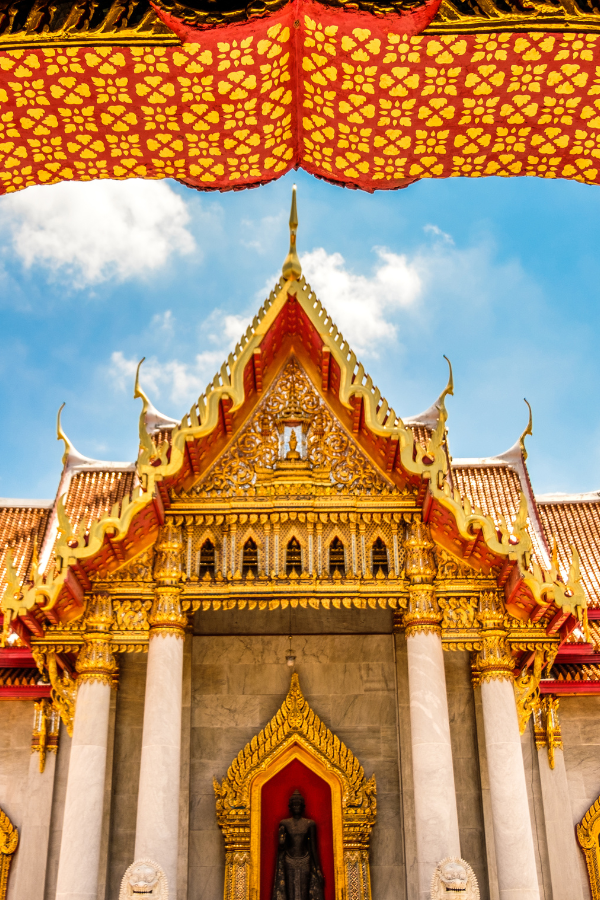
Embark on a captivating journey through the historical heart of Bangkok Thailand, exploring magnificent temples and ancient royal residences. This tour delves into the rich heritage, architectural marvels, and enduring traditions that have shaped the city. Discover the spiritual and regal foundations of Thailand, gaining deep insights into its profound cultural identity. Prepare to be inspired by the grandeur and stories embedded in every stone.
moreEmbark on a captivating journey through the historical heart of Bangkok Thailand, exploring magnificent temples and ancient royal residences. This tour delves into the rich heritage, architectural marvels, and enduring traditions that have shaped the city. Discover the spiritual and regal foundations of Thailand, gaining deep insights into its profound cultural identity. Prepare to be inspired by the grandeur and stories embedded in every stone.
["https://firebasestorage.googleapis.com/v0/b/freeguides-prod.appspot.com/o/assets%2Ftours%2Fr65Ne1EWUUQEPgXma9YW%2F3.png?alt=media&token=e7f62652-7016-4ff7-ae25-2affcf6a42c9"]
No items found.
["https://firebasestorage.googleapis.com/v0/b/freeguides-prod.appspot.com/o/assets%2Ftours%2Fr65Ne1EWUUQEPgXma9YW%2F3.png?alt=media&token=e7f62652-7016-4ff7-ae25-2affcf6a42c9"]
[{"address":"The Bedrooms Boutique Hotel","location":{"longitudeDelta":0.07621855349905388,"latitudeDelta":0.09219986310369421,"latitude":13.7092474,"longitude":100.6023271},"placeId":"ChIJ12EK9TW94jARMbiRzU6Un6E","media":[{"content":"https://firebasestorage.googleapis.com/v0/b/freeguides-prod.appspot.com/o/assets%2Ftours%2Fr65Ne1EWUUQEPgXma9YW%2F280208475.jpg?alt=media&token=1cc3c7d9-dbc2-4632-826b-8789f0f7d965","type":"img"},{"content":"I hope you slept well! Before heading out to explore the centuries of stories that shaped this 'City of Angels,' it is time to fuel up right here at the Bedrooms Boutique Cafe. Take a moment to enjoy your breakfast and a fresh coffee in this peaceful setting; it’s the perfect way to prepare for a day of immersion.\n\nBangkok is a city of layers. While the modern skyline of Sukhumvit surrounds you here, today’s journey will take you back to the roots of the Rattanakosin Kingdom, established in 1782. You will see how Brahman rituals, Buddhist philosophy, and traditional craftsmanship have all woven together to create the Thailand seen today.\n\nAs you finish your meal, keep in mind that the On Nut BTS station is just a short walk away. This modern transit system is the gateway to the historic heart of the city, allowing for easy travel between the fast-paced present and the majestic past.\n\nEnsure you have comfortable walking shoes and that your shoulders and knees are covered for the sacred sites ahead. Once you’ve had your fill and are ready to begin the journey, grab your camera and some water. The first landmark offers a 360-degree view of the city’s evolution.\n\n","type":"text"}]},{"address":"Wat Saket Ratchawora Mahawihan","location":{"longitudeDelta":0.11094716860144538,"latitude":13.753079153886821,"latitudeDelta":0.09219986310369421,"longitude":100.50654850000002},"placeId":"ChIJP-MtN12Z4jARlEBmga-oF4w","media":[{"content":"https://images.pexels.com/photos/28264971/pexels-photo-28264971.jpeg?auto=compress&cs=tinysrgb&dpr=2&h=650&w=940","type":"img"},{"content":"As you stand at the base of this man-made hill, you are looking at one of Bangkok’s most enduring landmarks: Wat Saket, popularly known as the Golden Mount. This 80-meter-tall hill is topped with a gleaming golden chedi that has watched over the city for generations.\n\nThe history of this site is a testament to perseverance. During the reign of King Rama III in the early 19th century, an attempt was made to build a massive chedi here, but the soft soil of Bangkok couldn't support the weight, and it collapsed into a pile of rubble. Over time, nature took over, and it became a vine-covered mound. It wasn't until the reign of King Rama IV that the structure was reinforced with thousands of teak logs, and finally, under King Rama V, the golden chedi you see today was completed.\n\nTo reach the top, you’ll climb a winding staircase of 344 steps. Don’t let the number intimidate you; the path is a gentle spiral shaded by lush trees and misting fans. As you ascend, listen for the sound of hundreds of small brass bells ringing in the breeze—a sound believed to bring good luck. You will also pass several large bronze bells; feel free to ring them as you go, a traditional way of making merit.\n\nOnce you reach the summit, you are rewarded with a breathtaking 360-degree view of Bangkok. Look to the west, and you’ll see the historic spires of the Grand Palace and the winding Chao Phraya River. Look to the east, and the modern skyscrapers of the business district rise into the sky. It is the perfect place to visualize how the city has grown from a riverside settlement into a global metropolis.\n\nInside the golden chedi, a sacred relic of the Buddha is enshrined, a gift from the British government in India to King Rama V. Take a moment to enjoy the breeze and the panoramic view before we descend back to the streets to explore a structure that is unique in the entire Buddhist world.\n\n","type":"text"}]},{"address":"Wat Ratchanatdaram Worawihan","location":{"latitudeDelta":0.09219986310369421,"longitudeDelta":0.11094716860144538,"longitude":100.50403829999999,"latitude":13.75485195388731},"placeId":"ChIJYTbBTBSZ4jARYTUWfRRhB8I","media":[{"content":"https://images.pexels.com/photos/28544981/pexels-photo-28544981.jpeg?auto=compress&cs=tinysrgb&dpr=2&h=650&w=940","type":"img"},{"content":"Welcome to the striking and unique Loha Prasat, often called the 'Metal Castle.' Located within the grounds of Wat Ratchanatdaram, this architectural marvel is unlike any other temple you will see in Thailand.\n\nBuilt by order of King Rama III in the mid-19th century, its design was inspired by ancient Buddhist temples in India and Sri Lanka. In fact, throughout history, only three such 'Metal Castles' were ever constructed in the world, and this is the only one that remains standing today.\n\nTake a moment to look up at the roofline. You’ll notice 37 gleaming spires. This number is deeply symbolic in Buddhist philosophy, representing the 37 virtues required to reach enlightenment. For many years, these spires were a dark, oxidized iron, but a major recent restoration has clad them in copper and gold, returning the structure to the original vision of a 'castle' that shines under the sun.\n\nAs you enter the structure, you’ll find that it is designed as a series of concentric square galleries connected by a central staircase. It feels more like a quiet fortress than a traditional temple. This layout is meant to encourage meditation and reflection as you move through the levels. The narrow corridors and small cells were traditionally intended for monks to use for quiet study and prayer.\n\nThe Loha Prasat is a rare example of a structure that prioritizes symbolic geometry and permanence over typical Thai temple aesthetics. It stands as a powerful reminder of the city's deep spiritual roots and the desire of past kings to connect Bangkok’s identity to the very origins of Buddhism. As you wander through its symmetrical halls, enjoy the cool, quiet atmosphere that feels worlds away from the busy traffic just outside the temple gates.\n\n","type":"text"}]},{"address":"Soi Ban Bat","location":{"latitude":13.750324506468264,"longitudeDelta":0.11094716860144538,"longitude":100.50670014999997,"latitudeDelta":0.09219986310369421},"placeId":"El9Tb2kgQmFuIEJhdCwgS2h3YWVuZyBCYW4gQmF0LCBLaGV0IFBvbSBQcmFwIFNhdHRydSBQaGFpLCBLcnVuZyBUaGVwIE1haGEgTmFraG9uIDEwMTAwLCBUaGFpbGFuZCIuKiwKFAoSCWOoAywWmeIwEd5nV-_Um1HTEhQKEgkd1wIkFpniMBEAiuJdsgABBA","media":[{"content":"https://firebasestorage.googleapis.com/v0/b/freeguides-prod.appspot.com/o/assets%2Ftours%2Fr65Ne1EWUUQEPgXma9YW%2FBuddhist_alms_in_Si_Phan_Don.jpg?alt=media&token=b459276f-30b0-45ff-9a38-c8afd2f1ebe9","type":"img"},{"content":"As you walk into this quiet alleyway, listen closely. The rhythmic 'tink-tink-tink' of metal hitting metal is a sound that has echoed through these streets for over 200 years. You are in Baan Bat, the last remaining community in Thailand that still hand-crafts alms bowls for Buddhist monks using traditional methods.\n\nWhen Bangkok was established as the capital in 1782, several villages were dedicated to specific crafts. While most have disappeared in the face of modern mass production, the artisans of Baan Bat have refused to let their heritage fade.\n\nTake a look at the bowls being worked on. A true Baan Bat bowl is not made from a single piece of metal. Instead, it is constructed from eight separate pieces of steel, representing the eight petals of a lotus and the Noble Eightfold Path of Buddhism. These pieces are joined together with copper and hammered repeatedly until the seams disappear and the bowl takes its perfect, rounded shape. The final step involves firing the bowl in a kiln and polishing it with a special black lacquer.\n\nThis process is incredibly labor-intensive; a single artisan can take several days to complete just one bowl. These bowls are highly prized by monks for their durability and the unique, resonant ring they make when a lid is placed on them.\n\nAs you wander through the small workshops, you might see families working together, passing down techniques from grandparent to grandchild. While you can purchase smaller souvenir versions of these bowls, remember that you are witnessing a sacred craft. This village is a living bridge to Bangkok’s past, surviving through a deep devotion to tradition and the spiritual life of the city.\n\nTake a moment to appreciate the skill in those calloused hands before we head toward a street famous for its traditional trade to find some lunch.\n\n","type":"text"}]},{"address":"Bamrung Mueang Road","location":{"longitudeDelta":0.1094105042163838,"latitude":13.75201885388648,"latitudeDelta":0.09219986310369421,"longitude":100.50360760000001},"placeId":"El1UaGFub24gQmFtcnVuZyBNdWVhbmcsIEtod2FlbmcgU2FtcmFuIFJhdCwgS2hldCBQaHJhIE5ha2hvbiwgS3J1bmcgVGhlcCBNYWhhIE5ha2hvbiwgVGhhaWxhbmQiLiosChQKEgn5E9YkFpniMBH7iiJISVO3IhIUChIJG84n8haZ4jARoIfiXbIAAQQ","media":[{"content":"https://firebasestorage.googleapis.com/v0/b/freeguides-prod.appspot.com/o/assets%2Ftours%2Fr65Ne1EWUUQEPgXma9YW%2F%E0%B8%9A%E0%B8%B3%E0%B8%A3%E0%B8%B8%E0%B8%87%E0%B9%80%E0%B8%A1%E0%B8%B7%E0%B8%AD%E0%B8%87-01.jpg?alt=media&token=d52dd15e-3102-4e2d-98ac-adcf52530abf","type":"img"},{"content":"Welcome to Bamrung Mueang Road, a street where the spiritual and the commercial blend seamlessly. Built in 1863, this is the second oldest paved road in Bangkok. As you walk toward the towering Giant Swing, you’ll find yourself surrounded by the 'Street of Religious Supplies.'\n\nThe shophouses here are a sight to behold—packed floor-to-ceiling with golden Buddha statues of all sizes, intricate brass bells, and bright saffron robes. For generations, this has been the primary hub for Thai Buddhists to purchase offerings and ceremonial items for temples across the country. Notice the architecture of the shophouses; many still retain the original 19th-century facade, which was widened to 9 meters under the orders of King Rama V to modernize the city.\n\nFor lunch, you are visiting a legendary institution: Kope Hya Tai Kee Na @The Giant SwingClick to open side panel for more information.\n\nEstablished in 1952, Kope Hya Tai KeeClick to open side panel for more information is one of the few remaining traditional Thai-Chinese coffee houses in the city. It serves as a nostalgic bridge to old Bangkok, once a bustling social hub for neighborhood residents and political gossip.\n\nSignature Dishes: Order the Kai Kata (pan-fried eggs served in a small metal pan with toppings like Chinese sausage and minced pork) and the crispy bread filled with savory fermented pork.\n\nThe Drink: You must try their signature O-Liang (traditional Thai iced coffee) or a Chafe, which is a unique, refreshing blend of tea and coffee.\n\nAtmosphere: The shop operates with a charming self-service system—find a table, note the number, order at the counter, and soak in the vintage marble-top tables and old-world wooden decor.\n\nOnce you’ve fueled up on these classic flavors, we’ll step just across the road to see one of Bangkok’s most iconic and mysterious landmarks.\n\n","type":"text"}]},{"address":"The Giant Swing","location":{"latitude":13.751748353886427,"longitudeDelta":0.1094105042163838,"latitudeDelta":0.09219986310369421,"longitude":100.50127510000003},"placeId":"ChIJX49VWsWZ4jARwEYBM0MDXnE","media":[{"content":"https://firebasestorage.googleapis.com/v0/b/freeguides-prod.appspot.com/o/assets%2Ftours%2Fr65Ne1EWUUQEPgXma9YW%2F018-Sao_Ching_Cha.jpg?alt=media&token=64621538-e346-4684-9ce9-744e2fc40205","type":"img"},{"content":"Just outside the coffee house, you are standing before one of Bangkok's most iconic and mysterious landmarks: The Giant Swing, or Sao Ching Cha. This towering teak structure, painted in a striking vermilion red, stands over 21 meters tall and has been a fixture of the city since it was first commissioned by King Rama I in 1784.\n\nThe history of the swing is tied to ancient Brahmanic rituals brought from India. Historically, it was the site of the Triyampawai ceremony, a spectacular event held every December to welcome the god Shiva to Earth. Teams of young men would compete to swing high into the air, attempting to grab a bag of silver coins tethered to a pole with their teeth. Because of the extreme height and the danger involved, the ceremony was officially discontinued in 1935 during the reign of King Rama VII.\n\nArchitectural Symbolism: The two towering pillars represent mountains, while the crossbar symbolizes the earth and the sky.\n\nThe Teak Legacy: The current structure is a faithful reconstruction from 2004, crafted from massive, century-old teak logs sourced from the Phrae province—teak is a wood prized in Thailand for its durability and spiritual significance.\n\nA Photographic Icon: This site is one of the most photographed spots in the city, especially during sunset when the red frame glows against the darkening sky.\n\nWhile the men no longer swing here, the structure remains a powerful symbol of the city’s early Brahman influence and its deep connection to the cosmos. Just behind the swing, you’ll see the grand entrance to the temple that was built to complement it.\n\n","type":"text"}]},{"address":"Wat Suthat Thepwararam Ratchaworamahawihan","location":{"longitude":100.50086365000003,"latitude":13.750029009506116,"latitudeDelta":0.09219986310369421,"longitudeDelta":0.1094105042163838},"placeId":"ChIJg-IqNBGZ4jAR0dPx_MR-gTk","media":[{"content":"https://firebasestorage.googleapis.com/v0/b/freeguides-prod.appspot.com/o/assets%2Ftours%2Fr65Ne1EWUUQEPgXma9YW%2F51890271324_5cfd48dc57_c.jpg?alt=media&token=3f4f8b1e-2e49-479e-8b5e-93125e7df2d6","type":"img"},{"content":"Welcome to Wat Suthat, one of the highest-ranking royal temples in Thailand and a masterpiece of early Rattanakosin architecture. Construction began in 1807 under King Rama I, but it took three reigns and nearly 40 years to complete this massive complex.\n\nThe first thing you’ll notice is the Phra Vihara, the main hall. Its doors are famous across the country—the original intricate wood carvings were personally designed and partially carved by King Rama II, who was a renowned artist.\n\nInside sits the Phra Sri Sakyamuni, an enormous bronze Buddha statue dating back to the 14th-century Sukhothai period. It was transported by river from the ruins of Sukhothai to Bangkok, an incredible feat of engineering for that time. Look closely at the base of the statue; it contains the ashes of King Rama VIII, the older brother of the late King Rama IX.\n\nThe Murals: The walls are covered in some of the most detailed and best-preserved murals in Thailand. They depict scenes from the Jataka tales (lives of the Buddha) and traditional Thai life, including fascinating details of 19th-century society.\n\nThe Chinese Influence: As you walk through the cloisters, you’ll see 28 Chinese stone pagodas. These were originally used as ballast on trade ships returning from China.\n\nA Place of Peace: Despite its central location, Wat Suthat feels incredibly tranquil. It is a 'first-class' royal temple, meaning it is one of the most significant spiritual centers for the Thai monarchy.\n\nTake a quiet walk through the stone cloisters, where 156 gilded Buddha images line the perimeter. It is the perfect place to reflect on the deep spiritual history you’ve witnessed today before we head to our final historical archive.\n\n","type":"text"}]},{"address":"National Museum Bangkok","location":{"longitudeDelta":0.1094105042163838,"longitude":100.49255199999998,"latitudeDelta":0.09219986310369421,"latitude":13.757560753888104},"placeId":"ChIJbXZLwgyZ4jARO_0Exd6l_lU","media":[{"content":"https://firebasestorage.googleapis.com/v0/b/freeguides-prod.appspot.com/o/assets%2Ftours%2Fr65Ne1EWUUQEPgXma9YW%2FBangkok_National_Museum_-_2017-04-22_(004).jpg?alt=media&token=8ba743da-77ab-4d79-a6f8-e3ccbda06350","type":"img"},{"content":"To conclude our historical journey, you are standing at the National Museum BangkokClick to open side panel for more information, the largest museum in Southeast Asia. This site itself is a piece of history; it occupies the former Wang Na (Front Palace), which was the residence of the Vice King during the early Rattanakosin period.\n\nThe museum houses a vast collection that spans the entire timeline of Thai history, from the prehistoric Neolithic era to the modern Bangkok period. It is the definitive archive of the nation's artistic and cultural evolution.\n\nThe Buddhaisawan Chapel: This stunning 18th-century chapel contains the Phra Phuttha Sihing, one of Thailand’s most revered Buddha images. The walls are adorned with beautiful, original murals depicting the life of the Buddha.\n\nThe Funeral Chariot Hall: One of the most breathtaking exhibits, this hall displays the massive, ornate golden chariots used for royal cremations. These towering structures are masterpieces of Thai woodcarving and traditional craftsmanship.\n\nArt Through the Eras: Wander through galleries dedicated to the Dvaravati, Srivijaya, Lopburi, Sukhothai, and Ayutthaya periods. You’ll see how regional influences and international trade routes shaped the distinct styles of Thai religious and royal art.\n\nThe King Ram Khamhaeng Inscription: You can view a replica of the famous 13th-century stone pillar, which is credited with containing the earliest known examples of the Thai script.\n\nTake your time walking through the various pavilions and open-air courtyards. It is a quiet, scholarly sanctuary where the fragments of the past are carefully preserved to tell the story of the Thai people. Once you’ve finished your exploration, it’s time to head back for a well-earned rest.\n\n","type":"text"}]},{"address":"The Bedrooms Boutique Hotel","location":{"latitude":13.709294803873917,"longitude":100.6022717,"longitudeDelta":0.1094105042163838,"latitudeDelta":0.09219986310369421},"placeId":"ChIJ12EK9TW94jARMbiRzU6Un6E","media":[{"content":"https://firebasestorage.googleapis.com/v0/b/freeguides-prod.appspot.com/o/assets%2Ftours%2Fr65Ne1EWUUQEPgXma9YW%2Foutdoor-night-town-restaurant-city-summer-690271-pxhere.com.jpg?alt=media&token=47cba8d1-5157-492f-9d31-9246b91bd724","type":"img"},{"content":"You have successfully traveled from the peaks of the Golden Mount to the halls of the National Museum, witnessing the spiritual, artisanal, and royal pillars that built this city. You’ve walked the oldest roads and seen the hands of craftsmen keeping 200-year-old traditions alive.\n\nNow, return to the quiet of The Bedrooms Boutique Hotel. Your cultural marathon is complete, and it is time for your celebration drink. Head to the hotel bar or café area and enjoy a refreshing beverage as you look back through your photos.\n\nReflect on the Day: From the clanging of the monk's bowls in Baan Bat to the serene face of the Buddha at Wat Suthat, you’ve experienced the 'Old City' in a way few visitors do.\n\nRelaxation: Use the hotel's comfortable social spaces to unwind. The transition from the historic Phra Nakhon district back to the modern comforts of Sukhumvit is the perfect way to appreciate the incredible duality of Bangkok.\n\nWe hope this tour has deepened your understanding of the 'City of Angels.' Whether you’re staying another night or heading to your next destination, you carry a piece of Bangkok’s history with you. Cheers to a day of discovery!\n\n","type":"text"}]}]
0
3
hours
7
times run
#
Rank
Embark on a captivating journey through the historical heart of Bangkok Thailand, exploring magnificent temples and ancient royal residences. This tour delves into the rich heritage, architectural marvels, and enduring traditions that have shaped the city. Discover the spiritual and regal foundations of Thailand, gaining deep insights into its profound cultural identity. Prepare to be inspired by the grandeur and stories embedded in every stone.
Rating
3
Hours
7
TOURS COMPLETED
#
rank
≈
0 kms

Language
English
Start Location
Tags
This is some text inside of a div block.
On-tour Inclusion and Exclusion
Inclusions
Self-guided
Anytime, Anywhere
Creates by locals
Photo-taking assist
Video-taking assist
Exclusion
Drinking water
Sunglass and skin sunblock
Thank you! Your submission has been received!
Oops! Something went wrong while submitting the form.
No ratings yet
Thank you! Your submission has been received!
Oops! Something went wrong while submitting the form.
Preview
[{"address":"The Bedrooms Boutique Hotel","location":{"longitudeDelta":0.07621855349905388,"latitudeDelta":0.09219986310369421,"latitude":13.7092474,"longitude":100.6023271},"placeId":"ChIJ12EK9TW94jARMbiRzU6Un6E","media":[{"content":"https://firebasestorage.googleapis.com/v0/b/freeguides-prod.appspot.com/o/assets%2Ftours%2Fr65Ne1EWUUQEPgXma9YW%2F280208475.jpg?alt=media&token=1cc3c7d9-dbc2-4632-826b-8789f0f7d965","type":"img"},{"content":"I hope you slept well! Before heading out to explore the centuries of stories that shaped this 'City of Angels,' it is time to fuel up right here at the Bedrooms Boutique Cafe. Take a moment to enjoy your breakfast and a fresh coffee in this peaceful setting; it’s the perfect way to prepare for a day of immersion.\n\nBangkok is a city of layers. While the modern skyline of Sukhumvit surrounds you here, today’s journey will take you back to the roots of the Rattanakosin Kingdom, established in 1782. You will see how Brahman rituals, Buddhist philosophy, and traditional craftsmanship have all woven together to create the Thailand seen today.\n\nAs you finish your meal, keep in mind that the On Nut BTS station is just a short walk away. This modern transit system is the gateway to the historic heart of the city, allowing for easy travel between the fast-paced present and the majestic past.\n\nEnsure you have comfortable walking shoes and that your shoulders and knees are covered for the sacred sites ahead. Once you’ve had your fill and are ready to begin the journey, grab your camera and some water. The first landmark offers a 360-degree view of the city’s evolution.\n\n","type":"text"}]},{"address":"Wat Saket Ratchawora Mahawihan","location":{"longitudeDelta":0.11094716860144538,"latitude":13.753079153886821,"latitudeDelta":0.09219986310369421,"longitude":100.50654850000002},"placeId":"ChIJP-MtN12Z4jARlEBmga-oF4w","media":[{"content":"https://images.pexels.com/photos/28264971/pexels-photo-28264971.jpeg?auto=compress&cs=tinysrgb&dpr=2&h=650&w=940","type":"img"},{"content":"As you stand at the base of this man-made hill, you are looking at one of Bangkok’s most enduring landmarks: Wat Saket, popularly known as the Golden Mount. This 80-meter-tall hill is topped with a gleaming golden chedi that has watched over the city for generations.\n\nThe history of this site is a testament to perseverance. During the reign of King Rama III in the early 19th century, an attempt was made to build a massive chedi here, but the soft soil of Bangkok couldn't support the weight, and it collapsed into a pile of rubble. Over time, nature took over, and it became a vine-covered mound. It wasn't until the reign of King Rama IV that the structure was reinforced with thousands of teak logs, and finally, under King Rama V, the golden chedi you see today was completed.\n\nTo reach the top, you’ll climb a winding staircase of 344 steps. Don’t let the number intimidate you; the path is a gentle spiral shaded by lush trees and misting fans. As you ascend, listen for the sound of hundreds of small brass bells ringing in the breeze—a sound believed to bring good luck. You will also pass several large bronze bells; feel free to ring them as you go, a traditional way of making merit.\n\nOnce you reach the summit, you are rewarded with a breathtaking 360-degree view of Bangkok. Look to the west, and you’ll see the historic spires of the Grand Palace and the winding Chao Phraya River. Look to the east, and the modern skyscrapers of the business district rise into the sky. It is the perfect place to visualize how the city has grown from a riverside settlement into a global metropolis.\n\nInside the golden chedi, a sacred relic of the Buddha is enshrined, a gift from the British government in India to King Rama V. Take a moment to enjoy the breeze and the panoramic view before we descend back to the streets to explore a structure that is unique in the entire Buddhist world.\n\n","type":"text"}]},{"address":"Wat Ratchanatdaram Worawihan","location":{"latitudeDelta":0.09219986310369421,"longitudeDelta":0.11094716860144538,"longitude":100.50403829999999,"latitude":13.75485195388731},"placeId":"ChIJYTbBTBSZ4jARYTUWfRRhB8I","media":[{"content":"https://images.pexels.com/photos/28544981/pexels-photo-28544981.jpeg?auto=compress&cs=tinysrgb&dpr=2&h=650&w=940","type":"img"},{"content":"Welcome to the striking and unique Loha Prasat, often called the 'Metal Castle.' Located within the grounds of Wat Ratchanatdaram, this architectural marvel is unlike any other temple you will see in Thailand.\n\nBuilt by order of King Rama III in the mid-19th century, its design was inspired by ancient Buddhist temples in India and Sri Lanka. In fact, throughout history, only three such 'Metal Castles' were ever constructed in the world, and this is the only one that remains standing today.\n\nTake a moment to look up at the roofline. You’ll notice 37 gleaming spires. This number is deeply symbolic in Buddhist philosophy, representing the 37 virtues required to reach enlightenment. For many years, these spires were a dark, oxidized iron, but a major recent restoration has clad them in copper and gold, returning the structure to the original vision of a 'castle' that shines under the sun.\n\nAs you enter the structure, you’ll find that it is designed as a series of concentric square galleries connected by a central staircase. It feels more like a quiet fortress than a traditional temple. This layout is meant to encourage meditation and reflection as you move through the levels. The narrow corridors and small cells were traditionally intended for monks to use for quiet study and prayer.\n\nThe Loha Prasat is a rare example of a structure that prioritizes symbolic geometry and permanence over typical Thai temple aesthetics. It stands as a powerful reminder of the city's deep spiritual roots and the desire of past kings to connect Bangkok’s identity to the very origins of Buddhism. As you wander through its symmetrical halls, enjoy the cool, quiet atmosphere that feels worlds away from the busy traffic just outside the temple gates.\n\n","type":"text"}]},{"address":"Soi Ban Bat","location":{"latitude":13.750324506468264,"longitudeDelta":0.11094716860144538,"longitude":100.50670014999997,"latitudeDelta":0.09219986310369421},"placeId":"El9Tb2kgQmFuIEJhdCwgS2h3YWVuZyBCYW4gQmF0LCBLaGV0IFBvbSBQcmFwIFNhdHRydSBQaGFpLCBLcnVuZyBUaGVwIE1haGEgTmFraG9uIDEwMTAwLCBUaGFpbGFuZCIuKiwKFAoSCWOoAywWmeIwEd5nV-_Um1HTEhQKEgkd1wIkFpniMBEAiuJdsgABBA","media":[{"content":"https://firebasestorage.googleapis.com/v0/b/freeguides-prod.appspot.com/o/assets%2Ftours%2Fr65Ne1EWUUQEPgXma9YW%2FBuddhist_alms_in_Si_Phan_Don.jpg?alt=media&token=b459276f-30b0-45ff-9a38-c8afd2f1ebe9","type":"img"},{"content":"As you walk into this quiet alleyway, listen closely. The rhythmic 'tink-tink-tink' of metal hitting metal is a sound that has echoed through these streets for over 200 years. You are in Baan Bat, the last remaining community in Thailand that still hand-crafts alms bowls for Buddhist monks using traditional methods.\n\nWhen Bangkok was established as the capital in 1782, several villages were dedicated to specific crafts. While most have disappeared in the face of modern mass production, the artisans of Baan Bat have refused to let their heritage fade.\n\nTake a look at the bowls being worked on. A true Baan Bat bowl is not made from a single piece of metal. Instead, it is constructed from eight separate pieces of steel, representing the eight petals of a lotus and the Noble Eightfold Path of Buddhism. These pieces are joined together with copper and hammered repeatedly until the seams disappear and the bowl takes its perfect, rounded shape. The final step involves firing the bowl in a kiln and polishing it with a special black lacquer.\n\nThis process is incredibly labor-intensive; a single artisan can take several days to complete just one bowl. These bowls are highly prized by monks for their durability and the unique, resonant ring they make when a lid is placed on them.\n\nAs you wander through the small workshops, you might see families working together, passing down techniques from grandparent to grandchild. While you can purchase smaller souvenir versions of these bowls, remember that you are witnessing a sacred craft. This village is a living bridge to Bangkok’s past, surviving through a deep devotion to tradition and the spiritual life of the city.\n\nTake a moment to appreciate the skill in those calloused hands before we head toward a street famous for its traditional trade to find some lunch.\n\n","type":"text"}]},{"address":"Bamrung Mueang Road","location":{"longitudeDelta":0.1094105042163838,"latitude":13.75201885388648,"latitudeDelta":0.09219986310369421,"longitude":100.50360760000001},"placeId":"El1UaGFub24gQmFtcnVuZyBNdWVhbmcsIEtod2FlbmcgU2FtcmFuIFJhdCwgS2hldCBQaHJhIE5ha2hvbiwgS3J1bmcgVGhlcCBNYWhhIE5ha2hvbiwgVGhhaWxhbmQiLiosChQKEgn5E9YkFpniMBH7iiJISVO3IhIUChIJG84n8haZ4jARoIfiXbIAAQQ","media":[{"content":"https://firebasestorage.googleapis.com/v0/b/freeguides-prod.appspot.com/o/assets%2Ftours%2Fr65Ne1EWUUQEPgXma9YW%2F%E0%B8%9A%E0%B8%B3%E0%B8%A3%E0%B8%B8%E0%B8%87%E0%B9%80%E0%B8%A1%E0%B8%B7%E0%B8%AD%E0%B8%87-01.jpg?alt=media&token=d52dd15e-3102-4e2d-98ac-adcf52530abf","type":"img"},{"content":"Welcome to Bamrung Mueang Road, a street where the spiritual and the commercial blend seamlessly. Built in 1863, this is the second oldest paved road in Bangkok. As you walk toward the towering Giant Swing, you’ll find yourself surrounded by the 'Street of Religious Supplies.'\n\nThe shophouses here are a sight to behold—packed floor-to-ceiling with golden Buddha statues of all sizes, intricate brass bells, and bright saffron robes. For generations, this has been the primary hub for Thai Buddhists to purchase offerings and ceremonial items for temples across the country. Notice the architecture of the shophouses; many still retain the original 19th-century facade, which was widened to 9 meters under the orders of King Rama V to modernize the city.\n\nFor lunch, you are visiting a legendary institution: Kope Hya Tai Kee Na @The Giant SwingClick to open side panel for more information.\n\nEstablished in 1952, Kope Hya Tai KeeClick to open side panel for more information is one of the few remaining traditional Thai-Chinese coffee houses in the city. It serves as a nostalgic bridge to old Bangkok, once a bustling social hub for neighborhood residents and political gossip.\n\nSignature Dishes: Order the Kai Kata (pan-fried eggs served in a small metal pan with toppings like Chinese sausage and minced pork) and the crispy bread filled with savory fermented pork.\n\nThe Drink: You must try their signature O-Liang (traditional Thai iced coffee) or a Chafe, which is a unique, refreshing blend of tea and coffee.\n\nAtmosphere: The shop operates with a charming self-service system—find a table, note the number, order at the counter, and soak in the vintage marble-top tables and old-world wooden decor.\n\nOnce you’ve fueled up on these classic flavors, we’ll step just across the road to see one of Bangkok’s most iconic and mysterious landmarks.\n\n","type":"text"}]},{"address":"The Giant Swing","location":{"latitude":13.751748353886427,"longitudeDelta":0.1094105042163838,"latitudeDelta":0.09219986310369421,"longitude":100.50127510000003},"placeId":"ChIJX49VWsWZ4jARwEYBM0MDXnE","media":[{"content":"https://firebasestorage.googleapis.com/v0/b/freeguides-prod.appspot.com/o/assets%2Ftours%2Fr65Ne1EWUUQEPgXma9YW%2F018-Sao_Ching_Cha.jpg?alt=media&token=64621538-e346-4684-9ce9-744e2fc40205","type":"img"},{"content":"Just outside the coffee house, you are standing before one of Bangkok's most iconic and mysterious landmarks: The Giant Swing, or Sao Ching Cha. This towering teak structure, painted in a striking vermilion red, stands over 21 meters tall and has been a fixture of the city since it was first commissioned by King Rama I in 1784.\n\nThe history of the swing is tied to ancient Brahmanic rituals brought from India. Historically, it was the site of the Triyampawai ceremony, a spectacular event held every December to welcome the god Shiva to Earth. Teams of young men would compete to swing high into the air, attempting to grab a bag of silver coins tethered to a pole with their teeth. Because of the extreme height and the danger involved, the ceremony was officially discontinued in 1935 during the reign of King Rama VII.\n\nArchitectural Symbolism: The two towering pillars represent mountains, while the crossbar symbolizes the earth and the sky.\n\nThe Teak Legacy: The current structure is a faithful reconstruction from 2004, crafted from massive, century-old teak logs sourced from the Phrae province—teak is a wood prized in Thailand for its durability and spiritual significance.\n\nA Photographic Icon: This site is one of the most photographed spots in the city, especially during sunset when the red frame glows against the darkening sky.\n\nWhile the men no longer swing here, the structure remains a powerful symbol of the city’s early Brahman influence and its deep connection to the cosmos. Just behind the swing, you’ll see the grand entrance to the temple that was built to complement it.\n\n","type":"text"}]},{"address":"Wat Suthat Thepwararam Ratchaworamahawihan","location":{"longitude":100.50086365000003,"latitude":13.750029009506116,"latitudeDelta":0.09219986310369421,"longitudeDelta":0.1094105042163838},"placeId":"ChIJg-IqNBGZ4jAR0dPx_MR-gTk","media":[{"content":"https://firebasestorage.googleapis.com/v0/b/freeguides-prod.appspot.com/o/assets%2Ftours%2Fr65Ne1EWUUQEPgXma9YW%2F51890271324_5cfd48dc57_c.jpg?alt=media&token=3f4f8b1e-2e49-479e-8b5e-93125e7df2d6","type":"img"},{"content":"Welcome to Wat Suthat, one of the highest-ranking royal temples in Thailand and a masterpiece of early Rattanakosin architecture. Construction began in 1807 under King Rama I, but it took three reigns and nearly 40 years to complete this massive complex.\n\nThe first thing you’ll notice is the Phra Vihara, the main hall. Its doors are famous across the country—the original intricate wood carvings were personally designed and partially carved by King Rama II, who was a renowned artist.\n\nInside sits the Phra Sri Sakyamuni, an enormous bronze Buddha statue dating back to the 14th-century Sukhothai period. It was transported by river from the ruins of Sukhothai to Bangkok, an incredible feat of engineering for that time. Look closely at the base of the statue; it contains the ashes of King Rama VIII, the older brother of the late King Rama IX.\n\nThe Murals: The walls are covered in some of the most detailed and best-preserved murals in Thailand. They depict scenes from the Jataka tales (lives of the Buddha) and traditional Thai life, including fascinating details of 19th-century society.\n\nThe Chinese Influence: As you walk through the cloisters, you’ll see 28 Chinese stone pagodas. These were originally used as ballast on trade ships returning from China.\n\nA Place of Peace: Despite its central location, Wat Suthat feels incredibly tranquil. It is a 'first-class' royal temple, meaning it is one of the most significant spiritual centers for the Thai monarchy.\n\nTake a quiet walk through the stone cloisters, where 156 gilded Buddha images line the perimeter. It is the perfect place to reflect on the deep spiritual history you’ve witnessed today before we head to our final historical archive.\n\n","type":"text"}]},{"address":"National Museum Bangkok","location":{"longitudeDelta":0.1094105042163838,"longitude":100.49255199999998,"latitudeDelta":0.09219986310369421,"latitude":13.757560753888104},"placeId":"ChIJbXZLwgyZ4jARO_0Exd6l_lU","media":[{"content":"https://firebasestorage.googleapis.com/v0/b/freeguides-prod.appspot.com/o/assets%2Ftours%2Fr65Ne1EWUUQEPgXma9YW%2FBangkok_National_Museum_-_2017-04-22_(004).jpg?alt=media&token=8ba743da-77ab-4d79-a6f8-e3ccbda06350","type":"img"},{"content":"To conclude our historical journey, you are standing at the National Museum BangkokClick to open side panel for more information, the largest museum in Southeast Asia. This site itself is a piece of history; it occupies the former Wang Na (Front Palace), which was the residence of the Vice King during the early Rattanakosin period.\n\nThe museum houses a vast collection that spans the entire timeline of Thai history, from the prehistoric Neolithic era to the modern Bangkok period. It is the definitive archive of the nation's artistic and cultural evolution.\n\nThe Buddhaisawan Chapel: This stunning 18th-century chapel contains the Phra Phuttha Sihing, one of Thailand’s most revered Buddha images. The walls are adorned with beautiful, original murals depicting the life of the Buddha.\n\nThe Funeral Chariot Hall: One of the most breathtaking exhibits, this hall displays the massive, ornate golden chariots used for royal cremations. These towering structures are masterpieces of Thai woodcarving and traditional craftsmanship.\n\nArt Through the Eras: Wander through galleries dedicated to the Dvaravati, Srivijaya, Lopburi, Sukhothai, and Ayutthaya periods. You’ll see how regional influences and international trade routes shaped the distinct styles of Thai religious and royal art.\n\nThe King Ram Khamhaeng Inscription: You can view a replica of the famous 13th-century stone pillar, which is credited with containing the earliest known examples of the Thai script.\n\nTake your time walking through the various pavilions and open-air courtyards. It is a quiet, scholarly sanctuary where the fragments of the past are carefully preserved to tell the story of the Thai people. Once you’ve finished your exploration, it’s time to head back for a well-earned rest.\n\n","type":"text"}]},{"address":"The Bedrooms Boutique Hotel","location":{"latitude":13.709294803873917,"longitude":100.6022717,"longitudeDelta":0.1094105042163838,"latitudeDelta":0.09219986310369421},"placeId":"ChIJ12EK9TW94jARMbiRzU6Un6E","media":[{"content":"https://firebasestorage.googleapis.com/v0/b/freeguides-prod.appspot.com/o/assets%2Ftours%2Fr65Ne1EWUUQEPgXma9YW%2Foutdoor-night-town-restaurant-city-summer-690271-pxhere.com.jpg?alt=media&token=47cba8d1-5157-492f-9d31-9246b91bd724","type":"img"},{"content":"You have successfully traveled from the peaks of the Golden Mount to the halls of the National Museum, witnessing the spiritual, artisanal, and royal pillars that built this city. You’ve walked the oldest roads and seen the hands of craftsmen keeping 200-year-old traditions alive.\n\nNow, return to the quiet of The Bedrooms Boutique Hotel. Your cultural marathon is complete, and it is time for your celebration drink. Head to the hotel bar or café area and enjoy a refreshing beverage as you look back through your photos.\n\nReflect on the Day: From the clanging of the monk's bowls in Baan Bat to the serene face of the Buddha at Wat Suthat, you’ve experienced the 'Old City' in a way few visitors do.\n\nRelaxation: Use the hotel's comfortable social spaces to unwind. The transition from the historic Phra Nakhon district back to the modern comforts of Sukhumvit is the perfect way to appreciate the incredible duality of Bangkok.\n\nWe hope this tour has deepened your understanding of the 'City of Angels.' Whether you’re staying another night or heading to your next destination, you carry a piece of Bangkok’s history with you. Cheers to a day of discovery!\n\n","type":"text"}]}]
Included
- Self-Guided experience
- Run anytime, anywhere, 24/7, with your own phone
- Self-Guided experience
Excluded
- Additional expenses such as food and drink
- Transport
Meet Your Guide
Welcome to The Bedrooms Boutique Hotel! Experience the city's charm with our self-guided tours and local tips. Access all your stay information here and enjoy your visit!
Meet Your Guide
.png?alt=media&token=3c00e948-67e7-4190-b98d-d03c53e36599)

Welcome to The Bedrooms Boutique Hotel! Experience the city's charm with our self-guided tours and local tips. Access all your stay information here and enjoy your visit!
No items found.
No items found.
Thank you! Your submission has been received!
Oops! Something went wrong while submitting the form.
Questions
No questions yet
Similar Experiences
No similar experiences yet

Self-Guided
Use your phone to explore a new city or your own home town.

Anywhere Anytime
You’re the boss. Start the experience virtually or at the start location. Initiate at a time that works for you.

Created by local experts
Each experience is hand made by a real local or organisation who is uniquely knowledgeable.

Extend the relationship with your guests beyond the lobby and into the real world
Follow us on


.svg)
.svg)
.svg)
.svg)
Copyrights ©XXXX FreeGuides. All rights reserved.
